
Wednesday, September 18, 2013

Wednesday, February 29, 2012

Saturday, February 25, 2012
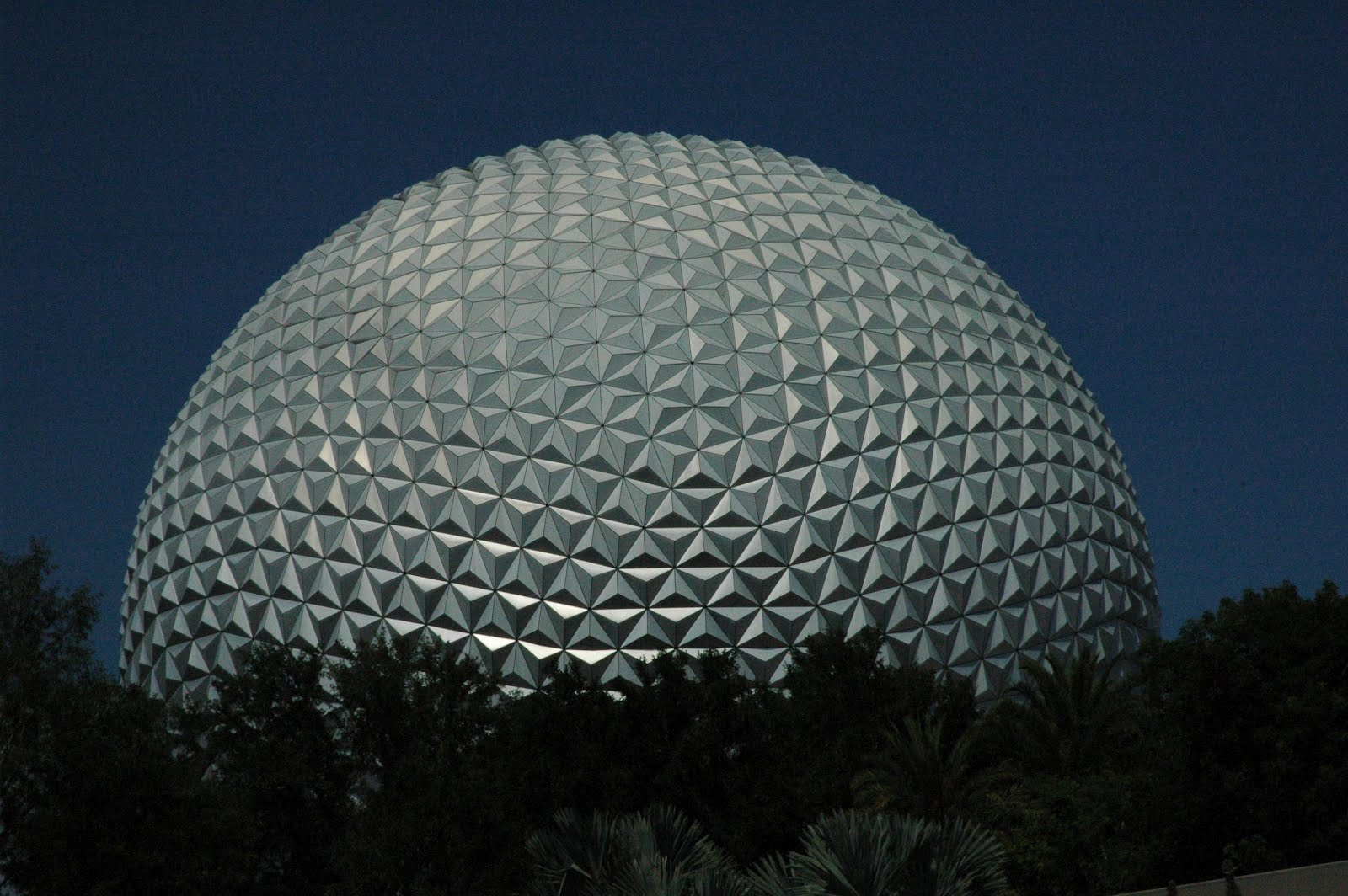
 Due to the economy, there is an interesting thing occuring. The crowds at Disney seem to be different.
This view is of a nice somewhat quiet park, gentle walk, easy day, and a relaxing time. But if one turns around...

Here they come!

The Tower of Terror
If one has a bad back,(we both do) then this IS the ride for you. No slamming or crunching or whipping about, but it does....boing, and give you a rush. Photobear's rating..4 out of 5 clicks.
We rode it, again.
Just a question, is the guy in the middle pic, Obama? Or his clone?

The two gentlemen on the left aren't sure either.
Just goes to show you that everybody loves Disney!
Monday, July 18, 2011
Universal Park
The first park section you will come to, is Dr. Suess. My son loved this area several years ago.... now he's 24.
sorry for the skimpy lines, triple bypass is a bear to get over. I'll have a little more time to post now. Stay photohealthy.


Friday, July 1, 2011
Finally, a vacation.
 So, we finally went to Universal, Orlando. If you can't tell, this is the new Harry Potter section. The wife and I have been waiting for it to open and now it is. The castle is the container for a wild ride, so there won't be a tour other than being slung about in the dark (air conditioned) being chased by a dragon. Lots of fun. And, it was hot. Now, you must try the 'butter beer', it's not too bad, if it was bottled, ...hmmm.
 This was for sale in the park. I didn't look because if you have to ask.... It was cool. More later, as I'll have a little more time after bypass. Yes, I do have a heart. Happy photojourney.
Sunday, June 7, 2009
 We went to Gatlinburg, Tenn. and had a wonderful time. Timing is important, school wouldn't let out for two weeks so the number of munchkins was low, also Memorial day was the week after we were there. That kept the prices low. Thee Photobear is thrifty. This is the place we stayed, our friends got a suite with two bedrooms and a really nice creek view. The sound of rushing water is soothing and the weather was perfect. One thing about Gatlinburg is the quantity and quality of the water. We had just come out of a two year drought in the Atlanta area, and it is refreshing to experience the nice flows.
  There is a sustantial creek running right beside the hotel, our balconey is second floor about halfway down the building. Straight down is the creek. Next to us across a small isle is a short dam, the sound is far superior to any city noises I'm use to.
  Our first excursion was to Cades Cove, it is a flat area within the Great Smokey Mountains, about five miles long and approximately one mile wide. The original settlers were the Indians indigenous to the area. How they originally found the Cove is a mystery to me, it is one hard walk into that area. Somebody let slip to the white people what was there and suddenly they had to go, then the Federal Gov. stepped in and relocated the white folk. There is still a court squabble ongoing today.
  As you can see, deer love this place. Every traffic jam usually involved them. They have no fear of man and one can get quite close to them. I couldn't, passengers don't get to call the photostops. That's ok, because there were more.
 When you are shooting them remember they like cover and even though it is day time the shade reduces availible light. I had my short tele cranked out as far as it would go. Then cropped the pix a little. The Nikon D70s was able to compensate for the lighting, but my shutter speeds were a little slow. The Nikon SLRs have thousands of exposure scenarios built in and over the years I've come to trust that ability. My only want was to get a little closer, faster lens, more pixels, and everything the average photobear could want.
  The settlers who lived here had excellent water suppies, quality and quantity. It is a beautiful place.
 I love shooting water. The motion, the feel of its life makes it one of my favorite subjects. Plus its a lot of fun.
 The water wheel below turned a grain,corn grinding wheel inside the building. There is actual grinding going on and we bought some corn meal there. It is very dark inside, so I didn't make any pix. [Yes, I know what a flash is, I hate them] [OK, hate is a strong word, dislike the way the picture looks with flash. Is that better?] The wheel isn't spinning madly, its just a long exposure to get the water's motion. I braced the camera on the rail and made three exposures. Love digital, a large memory card allows you to take many pictures without running out of film. Memory cards are very cheap now, it makes no sense to not carry several.
 The lighting was just right for this piece of farming equipment, the horse drawn sickle is in the shade but the sun was bouncing up off the ground in front of it giving the item a 'quality of light' feel. Also there is plenty of light to use a small aperture and get plenty of depth-of-field.
Review: depth-of-field is the area of the photograph that is in focus. A large aperture gives small depth allowing the background to be out of focus and the primary subject jumps out of the picture catching all of your attention. Small apertures give large depth, sometimes so large everything in the photograph is in focus. that puts your primary subject in its enviroment.
 There's more later. The Photobear. ....and there was a bear, too.
Saturday, May 30, 2009

So, I've escaped my little doldrums. I've been researching and trying to shift my little photomind from film to digital. I found some advice that may [or not] interest you; photography should be fun. All the thinking about apertures, shutter speeds, film[digital] speeds, and composition, and the other things that go into a really good picture, fun should be one of the reasons we do it. To finally answer my phototeachers never to be answered question, "why did you take this picture?" Because I enjoyed taking it! Now I can get my 'A'.
 This group of photographs are at Disney's free park called "Downtown Disney" [the east end]. Think of this place like a Disney park without the rides and the 'entry' fee. Not that you won't spend a few dollars, Disney would never condone that. However it is a nice place. there are (of course) Disney stores, restaurants, stores, McDonalds, shows, theaters, music store, gift and knic-knac stores, and a neat five story video arcade. at the west end there is Cirque du Soleil La Nouba with live shows. If Planet Hollywood rings a bell, there's one too. Scout out the whole line of stores. At night the 'Pleasure Island' section comes to life with live music, dancing, and late night entertainment. [We drove by the place on New Years Eve, and from the looks of the parking lot, getting there early would be an excellent idea.]
 If you look closely Stitch is spraying a stream of water, you may not know it if you're just standing there but you will.
That's the Rainforest cafe rising above the east end of the park, we eat there almost everytime we go. Try the 'Volcano' for dessert, you must leave room for it!
 That is a Lego sculpture. Somebody had a little too much time on their hands. There are others.
This a nice restaurant on the lake, in the lake. 'Puff' thinks so, too.
 This is another view, taken for 'fun'.
 So, remember, that camera is more than just an incredibly advanced piece of electronic equipment, it's a FUN adventure in your hand.
 This is another view, taken for 'fun'.
 So, remember, that camera is more than just an incredibly advanced piece of electronic equipment, it's a FUN adventure in your hand.
Subscribe to:
Posts (Atom)


